
Blog
Kracensoft.com: Complete Guide to the Technology Website in 2026


In 2026, kracensoft.com is appearing in searches from people who want to understand technology, software, applications, artificial intelligence, programming, and other digital subjects. One important point should be clarified at the beginning: the name Kracensoft can sound like a particular software product or a software-development company, but the current visible domain primarily presents itself through technology articles and informational content. Recent pages on the domain cover subjects ranging from artificial intelligence and software development to browser updates, online services, and practical technology questions.
This distinction matters because several third-party websites describe Kracensoft.com differently. Some characterize it as a technology publication, while others describe it as a software-solutions or IT-services platform. The publicly visible structure of the actual domain provides stronger evidence for understanding what visitors can currently expect: an online technology resource containing articles, explanations, guides, and technology news.
What Is Kracensoft.com Used For?
The most practical way to understand kracensoft.com is as a website where readers can explore information about the rapidly changing digital world. Its published material includes technology news, software-related explanations, artificial intelligence topics, programming subjects, and practical guides. For example, the site has published material discussing generative AI in custom software development and developments involving web browsers and cybersecurity.
This type of technology publication can be useful for readers who are researching a new digital product, trying to understand a technical concept, or simply following developments in software and artificial intelligence. Instead of treating Kracensoft as one application that users download and install, it is more accurate to view the domain as an information destination. A third-party review published in September 2026 similarly describes the website as a technology-content resource covering software reviews, WordPress tutorials, cybersecurity guides, and productivity topics.
Main Technology Topics Covered by Kracensoft
One of the most noticeable characteristics of Kracensoft.com is the breadth of its technology coverage. Rather than focusing exclusively on one software category, its content reaches across several areas of the modern digital ecosystem. These include software, applications, artificial intelligence, programming, WordPress, Windows tools, social networks, cybersecurity, and general technology developments.
Artificial intelligence is particularly relevant in the site’s 2026 content. An article about generative AI explains how AI can assist with code creation, documentation, testing, database queries, technical explanations, and software-development workflows. This reflects a broader trend in which AI is becoming part of conventional development rather than functioning only as a standalone chatbot or content-generation tool.
The website also publishes content connected with browsers and online security. A September 2026 article, for example, discusses changes to Google’s Chrome release schedule and connects more frequent updates with security and vulnerability management. Such articles demonstrate how a technology publication can help readers follow changes that affect everyday digital activities.
Kracensoft.com as a Technology Information Resource
For someone discovering kracensoft.com for the first time, the site’s editorial nature is an important consideration. The website discusses products and technologies that may be developed or operated by other organizations. Therefore, an article about a software application should not automatically be interpreted as an official product page belonging to that application’s developer.
This distinction is especially important when reading content about software downloads, account services, cybersecurity, artificial intelligence tools, or online applications. A technology article can explain how a product works without being the company that owns or operates the product. Readers should therefore verify important information directly with the original software developer or service provider before downloading software, entering sensitive information, or paying for a service.
The site’s contact page also provides a conventional online contact form, showing that the domain has a direct route for visitors who want to send an inquiry.
Is Kracensoft.com a Software Company or a Blog?
This is one of the most common questions surrounding the name Kracensoft.com. Search results contain conflicting descriptions. Some external publications describe Kracensoft as a software-solutions company providing digital services, while other recent analyses describe it as a technology publication.
The distinction becomes clearer when looking at the actual domain’s recent articles. Its pages are organized around published technology stories and explanatory guides, including articles about AI, browser developments, and software-development concepts. That structure resembles a technology magazine or editorial website more closely than a conventional SaaS dashboard or centralized software marketplace.
There are also similarly named domains, which creates additional confusion. In particular, kracensoft.com should not automatically be treated as identical to kracenssoft.com or other domains with similar spellings. Exact domain spelling is important when researching ownership, articles, downloads, contact information, or security details.
How to Use Kracensoft.com Safely
Readers can approach kracensoft.com as they would any independent technology publication: use its articles for information and then verify important technical or security-sensitive claims against authoritative sources. This is especially important when an article discusses software installation, system changes, online forms, account credentials, or cybersecurity.
Visitors should also pay attention to the difference between an informational article and an official service. If a Kracensoft article discusses another company’s application, readers should obtain the application from the developer’s official website or another trusted distribution channel rather than assuming that an article itself represents an official download source.
Basic online safety practices remain useful as well. Keep operating systems and browsers updated, avoid entering passwords on unfamiliar pages, check website addresses carefully, and investigate unfamiliar downloads before opening them. An HTTPS connection can protect information while it is transmitted, but it does not by itself prove that every claim on a website is accurate or that every external link is trustworthy.
Frequently Asked Questions About Kracensoft.com
What is kracensoft.com?
Kracensoft.com is a technology-focused website publishing articles about software, applications, artificial intelligence, programming, digital tools, and related technology subjects. Its current visible structure is primarily editorial rather than that of a single downloadable software product.
Is Kracensoft.com a software application?
The current domain should not simply be treated as one software application. Its visible pages consist largely of technology articles and guides, although some third-party websites describe the name as a software or IT-services business.
What topics does Kracensoft.com cover?
Its visible content includes AI, software development, applications, programming, WordPress, Windows, browser technology, cybersecurity, and broader technology news.
Can readers use Kracensoft.com for technology research?
Yes. The site’s articles can serve as a starting point for understanding technology topics and discovering new developments. For important security, purchasing, or software-installation decisions, readers should also verify information through the relevant official provider.
Is Kracensoft.com the same as similarly spelled websites?
No assumption should be made based solely on a similar name. Domain spelling matters, and websites with additional or missing letters can represent completely different properties.
Conclusion
Kracensoft.com is best understood in 2026 as a technology-oriented online publication whose visible content covers software, artificial intelligence, programming, applications, browsers, cybersecurity, and other digital subjects. Its name can create confusion because some external pages describe it as a software-services company, while the actual site’s recent content is strongly oriented toward technology articles and explanations.
For readers searching for Kracensoft.com, the most useful approach is to treat the site as an information resource, examine individual articles carefully, and verify important technical or security-related information with original providers. As the technology landscape continues to change throughout 2026, websites covering AI, software, programming, and cybersecurity can provide valuable context—but careful source verification remains essential when information involves downloads, payments, accounts, or sensitive data.

Incfidelibus is an unusual term that has generated significant online curiosity in 2026. At first glance, it looks like an ancient Latin expression, but the spelling creates an important distinction: “incfidelibus” is not established as a standard Latin word, while the closely related “infidelibus” is a genuine Latin grammatical form derived from infidelis.
The term is also associated with a modern website, incfidelibus.com, which currently presents itself as a general informational publishing site. This creates an additional source of confusion because historical online references have connected the IncFidelibus name with hacking-related material, whereas the current visible website focuses on ordinary informational articles.
Understanding incfidelibus therefore requires looking at both sides of the subject: its linguistic connection to Latin and its modern internet identity.
What Does Incfidelibus Mean?
The simplest answer is that incfidelibus does not have a securely established independent meaning in standard Latin. The form most closely associated with it is infidelibus, without the additional “c.” That is a documented Latin form derived from the adjective infidelis.
Depending on context, infidelis can express ideas such as unfaithful, faithless, disloyal, unreliable, or unbelieving. The form infidelibus is a dative or ablative plural, meaning its exact English translation depends on the sentence in which it occurs. Possible contextual interpretations include phrases such as “to the unfaithful,” “for the unbelieving,” or “with/by the unfaithful.”
The additional “c” in incfidelibus is the central problem. Current explanations do not establish it as a legitimate Latin prefix or grammatical construction. Instead, the unusual spelling is generally described as a typo, transcription error, OCR error, corrupted spelling, or modern online variant.
This distinction matters because simply giving incfidelibus the established meaning of infidelibus would present an uncertain spelling as though it were historically documented.
The Latin Word Behind Incfidelibus
To understand the term properly, we need to examine the Latin word infidelis.
The linguistic family can be simplified as follows:
fides → fidelis → infidelis → infidelibus
The Latin noun fides is associated with concepts such as faith, trust, confidence, and loyalty. From this comes fidelis, meaning faithful, loyal, or trustworthy. Adding the negative prefix in- produces infidelis, conveying the opposite idea: unfaithful, faithless, disloyal, or not trustworthy. In later religious contexts, the word could also describe someone who was unbelieving.
The ending “-ibus” is also significant. Latin uses grammatical endings to indicate case and number. Infidelibus is a plural form that can function in the dative or ablative case, so its translation depends upon the surrounding sentence.
This explains why incfidelibus can look convincing to someone unfamiliar with Latin. It resembles an authentic Latin construction, but the inserted c does not have an established grammatical role in the standard form.
Is Incfidelibus an Ancient Latin Word?
Current evidence does not establish incfidelibus as a standard ancient Latin word. Several recent explanations examining the term distinguish the unusual spelling from the documented infidelibus.
This is an important point when researching historical language. A word appearing on a webpage, in a scanned document, or in a copied text does not automatically make that spelling historically authentic. OCR technology, transcription, typing mistakes, and repeated copying can introduce errors into digital texts.
Once an unusual spelling appears online, other websites can reproduce it. A later writer may then interpret the repeated appearance as evidence of an established historical word. This creates a cycle in which repetition can make an uncertain claim look authoritative.
For that reason, researchers interested in Latin should distinguish between documented vocabulary and an unusual spelling that happens to resemble documented vocabulary.
Incfidelibus vs. Infidelibus: What Is the Difference?
The easiest way to understand the distinction is to compare the forms:
| Term | Status | General meaning |
|---|---|---|
| fides | Established Latin | Faith, trust, confidence, loyalty |
| fidelis | Established Latin | Faithful, loyal, trustworthy |
| infidelis | Established Latin | Unfaithful, faithless, disloyal, unbelieving |
| infidelibus | Established grammatical form | Context-dependent dative/ablative plural |
| incfidelibus | Non-standard/uncertain spelling | Usually treated as a variant or error |
The important difference is the extra “c.” There is currently no strong evidence that the letter represents a forgotten Latin prefix, special dialect, or independent philosophical concept. The safer interpretation is that incfidelibus is a corrupted or nonstandard form associated with infidelibus.
Anyone translating the term should therefore examine the original context before assigning a definite meaning.
Why Is Incfidelibus Appearing Online?
The unusual term has become increasingly visible because several websites have published articles explaining its meaning, spelling, history, and possible origins. Search results from 2026 show numerous pages specifically dedicated to the keyword.
Some discussions have also associated the word with strange or suspicious emails. One current explanation says that unfamiliar Latin-looking terminology can be used in scam messages to make a communication appear more serious or intimidating.
This does not mean that every email containing the term is necessarily fraudulent. Instead, the sensible approach is to evaluate the entire message, including its sender, links, attachments, requests for money, and instructions to provide personal information.
Searching for the word itself is not inherently dangerous. The greater risk comes from interacting with suspicious links, attachments, payment requests, or login forms.
What Is Incfidelibus.com?
There is a second meaning attached to the keyword in 2026: incfidelibus.com is currently visible as an informational publishing website.
Its present content includes articles discussing websites, technology, digital subjects, and other general-interest topics. A current page on the domain, for example, discusses Thesindi.com and describes it as a multi-niche content website covering areas such as technology, finance, health, business, education, lifestyle, and law.
The current site therefore appears substantially different from the historical material that some sources associate with the IncFidelibus name.
A particularly important point is that a domain can change ownership, expire, be acquired, or be repurposed. Available current information does not establish that the people operating the modern informational website are necessarily the same people associated with historical uses of the name.
Consequently, historical references and the current website should be treated as separate periods unless reliable ownership evidence connects them.
The Historical Hacking Association and the Need for Context
Some online sources connect IncFidelibus with historical hacking or monitoring-related material. This is one reason the keyword can produce conflicting search results. However, the existence of historical references does not by itself establish that the current website has the same purpose or ownership.
This distinction is particularly important when researching old domains. Websites can undergo substantial changes over time, and a domain name alone does not prove continuity of management.
The most defensible conclusion for 2026 is therefore narrow: historical online material associated the IncFidelibus name with hacking-related content, while the current visible incfidelibus.com presents itself as a general informational publication. Publicly available evidence reviewed does not establish continuity between those versions.
Frequently Asked Questions About Incfidelibus
What does incfidelibus mean?
There is no securely established independent Latin definition for incfidelibus. It closely resembles the genuine Latin form infidelibus.
What does infidelibus mean?
Infidelibus is the dative or ablative plural of infidelis. Depending on context, it can relate to “the unfaithful,” “the faithless,” or “the unbelieving.”
Is incfidelibus a real Latin word?
The spelling is not established as a standard Latin form in the sources examined. The better-supported form is infidelibus.
Why does incfidelibus have an extra “c”?
The available evidence does not establish a special linguistic reason. A typing error, transcription error, OCR mistake, or copied spelling is a more cautious explanation.
Is incfidelibus.com a website?
Yes. The current incfidelibus.com presents itself as a general informational publishing website.
Is the current website the same as historical IncFidelibus material?
That has not been established by reliable public evidence. Domains can change ownership or purpose, so historical and current uses should not automatically be treated as the same operation.
Can the word appear in scam emails?
Some recent online explanations associate the unusual term with suspicious emails. If it appears in an unexpected message, the safest approach is to evaluate the message using ordinary spam and phishing precautions rather than assuming the word itself has special power or significance.
Conclusion
Incfidelibus is a fascinating example of how a small spelling difference can create substantial confusion online. The term looks convincingly Latin, but current evidence does not establish it as a standard Latin word. The documented form that most closely resembles it is infidelibus, a grammatical form of infidelis associated with ideas such as unfaithfulness, faithlessness, disloyalty, and unbelief.
At the same time, incfidelibus.com is currently presented as a general informational website, while historical online references have associated the IncFidelibus name with different activities. Those periods should not automatically be treated as belonging to the same operator without evidence.
For anyone researching incfidelibus in 2026, the most accurate approach is to separate verified Latin vocabulary, modern internet usage, website history, and speculation. That distinction provides a much clearer understanding of why this unusual term continues to attract attention.

The Honda Civic 93, more commonly written as the 1993 Honda Civic, remains an interesting classic compact car for enthusiasts, collectors, restoration projects and drivers who appreciate lightweight front-wheel-drive vehicles. As part of the Civic’s fifth generation, the 1993 model was offered in several body styles and trim levels, including hatchbacks, coupes and sedans.
The 1993 Civic range was unusually diverse. Depending on the market and configuration, buyers could choose economical 1.5-liter models, the sportier 1.6-liter Si and EX versions, and the fuel-economy-focused VX hatchback. Contemporary specifications show that the U.S. lineup included CX, DX, LX, EX, Si and VX versions, with different engines, transmissions and equipment levels.
1993 Honda Civic Design and Body Styles
The 1993 Honda Civic belongs to the fifth-generation Civic family, a generation introduced around the beginning of the 1990s. Its relatively low weight, compact dimensions and aerodynamic body helped establish the Civic as an efficient everyday vehicle while also making certain versions popular with enthusiasts.
U.S. specifications included three-door hatchbacks, two-door coupes and four-door sedans. Cars.com lists CX, DX, LX, EX, Si and VX configurations for the 1993 model year, with the exact combination of body style and engine varying by trim.
The hatchback is particularly recognizable today because of its compact proportions and practical rear cargo opening. The coupe has a longer, sportier profile, while the sedan provides additional rear-seat practicality.
Most configurations used front-wheel drive, an arrangement that contributed to the Civic’s compact packaging and predictable everyday handling. The vehicle was also relatively light by modern standards, which is one reason older Civic models continue to attract modification and restoration enthusiasts.
1993 Honda Civic Engine Options and Performance
Engine specifications depended heavily on the selected trim. The mainstream Civic models used 1.5-liter four-cylinder engines, while higher-performance versions such as the EX and Si used 1.6-liter four-cylinder engines. The 1993 Civic Si hatchback, for example, is listed with a 1.6-liter engine producing 125 horsepower at 6,600 rpm and 106 lb-ft of torque at 5,200 rpm.
The 1.5-liter versions were oriented more toward efficiency and everyday transportation. CarGurus lists a 1.5-liter DX configuration with approximately 102 horsepower, while the VX used a different efficiency-focused 1.5-liter configuration.
The Civic Si is particularly significant for enthusiasts because its combination of a 1.6-liter engine, five-speed manual transmission, lightweight chassis and front-wheel drive gives it a distinctly sportier character than the basic models.
The period specifications also demonstrate how dramatically the Civic lineup could differ depending on trim. A 1992 Honda technical comparison published by Lawrence Berkeley National Laboratory, for example, lists a 102-horsepower DX and a 92-horsepower VX, with the VX using VTEC-E technology and a five-speed manual transmission.
1993 Honda Civic MPG and Fuel Economy
Fuel economy was one of the defining characteristics of the early-1990s Civic. The exact result depended on the engine, transmission, body style and testing methodology.
Historical data from Lawrence Berkeley National Laboratory shows the 1992 VX achieving exceptionally high adjusted fuel-economy figures, with the listed 49-state version reaching 48 mpg city and 55 mpg highway on the adjusted test figures. The same source identifies the VX’s VTEC-E engine and lightweight construction as part of its efficiency-oriented configuration.
For the 1993 Civic, published specifications vary by trim. Edmunds lists the 1993 Civic Si at 25 mpg city and 32 mpg highway, while other configurations used less powerful engines designed around everyday efficiency.
It is important to distinguish historical EPA testing from modern fuel-economy measurements. Older vehicles were tested under procedures that do not always correspond directly with today’s ratings, so period MPG figures should be interpreted in their original context.
The VX hatchback is particularly notable because Honda engineered it specifically around fuel efficiency. Its low weight, aerodynamic body and specialized engine technology made it one of the most economical Civic configurations of its era.
1993 Honda Civic Interior, Dimensions and Practicality
Despite its compact exterior, the Honda Civic 93 made efficient use of its interior space. The fifth-generation platform provided useful front-seat room while keeping the overall vehicle relatively small.
Specifications for the hatchback include approximately 42.5 inches of front legroom and 30.5 inches of rear legroom. The 1993 Civic hatchback is listed at about 160.2 inches long, 66.9 inches wide and 50.7 inches tall, with a 101.3-inch wheelbase.
Depending on configuration, the Civic could accommodate up to five occupants. The sedan’s longer body provided additional rear-seat space compared with the shorter hatchback.
Interior equipment was basic compared with a modern vehicle. Depending on trim, buyers could find features such as power windows, power door locks, cruise control, power mirrors, air conditioning and a sunroof, while lower trims were considerably simpler.
This simplicity is now part of the appeal for some enthusiasts. There are fewer electronic systems than in a modern vehicle, making many mechanical and interior components easier to understand and service.
1993 Honda Civic Si, EX, VX and Other Trims
The variety of 1993 Honda Civic trims is one of the model’s most interesting characteristics.
The CX represented an entry-level hatchback configuration. The DX was available across hatchback, coupe and sedan body styles, giving buyers a broad range of practical configurations. The LX was a sedan-focused trim with additional convenience equipment.
The EX moved toward a more powerful and better-equipped specification, using a 1.6-liter four-cylinder engine. According to Cars.com, 1993 EX versions were offered as both coupes and sedans, with manual and automatic transmission choices depending on configuration.
The Si was the enthusiast-oriented hatchback. Its 1.6-liter engine produced 125 horsepower, and it was paired with a five-speed manual transmission.
The VX, meanwhile, pursued the opposite objective: maximizing fuel efficiency. It used a 1.5-liter engine and five-speed manual transmission, with historical data identifying its VTEC-E technology.
Original pricing also varied substantially. Cars.com lists the 1993 Civic starting at $8,950 for the CX hatchback, while higher trims such as the EX sedan reached more than $15,000 depending on configuration.
Is the Honda Civic 93 Still Worth Considering in 2026?
In 2026, a 1993 Honda Civic is more than three decades old, so condition matters far more than the original trim name. A well-preserved example and a heavily modified or neglected example can have completely different ownership experiences.
When evaluating a Honda Civic 93, we should inspect the body for rust, examine the engine for leaks, check the cooling system, inspect suspension and steering components, and verify the condition of the transmission. On a manual car, the clutch deserves particular attention.
The maintenance history is equally important. Because these cars are now decades old, rubber components, hoses, seals, bushings, wiring and other age-sensitive parts may require replacement even when the engine itself appears healthy.
The Civic’s lightweight construction, simple mechanical layout and enormous enthusiast community have helped keep many examples on the road. The 1993 Civic Si, in particular, has become an enthusiast-focused model, while the VX is interesting to collectors because of its unusual emphasis on fuel economy.
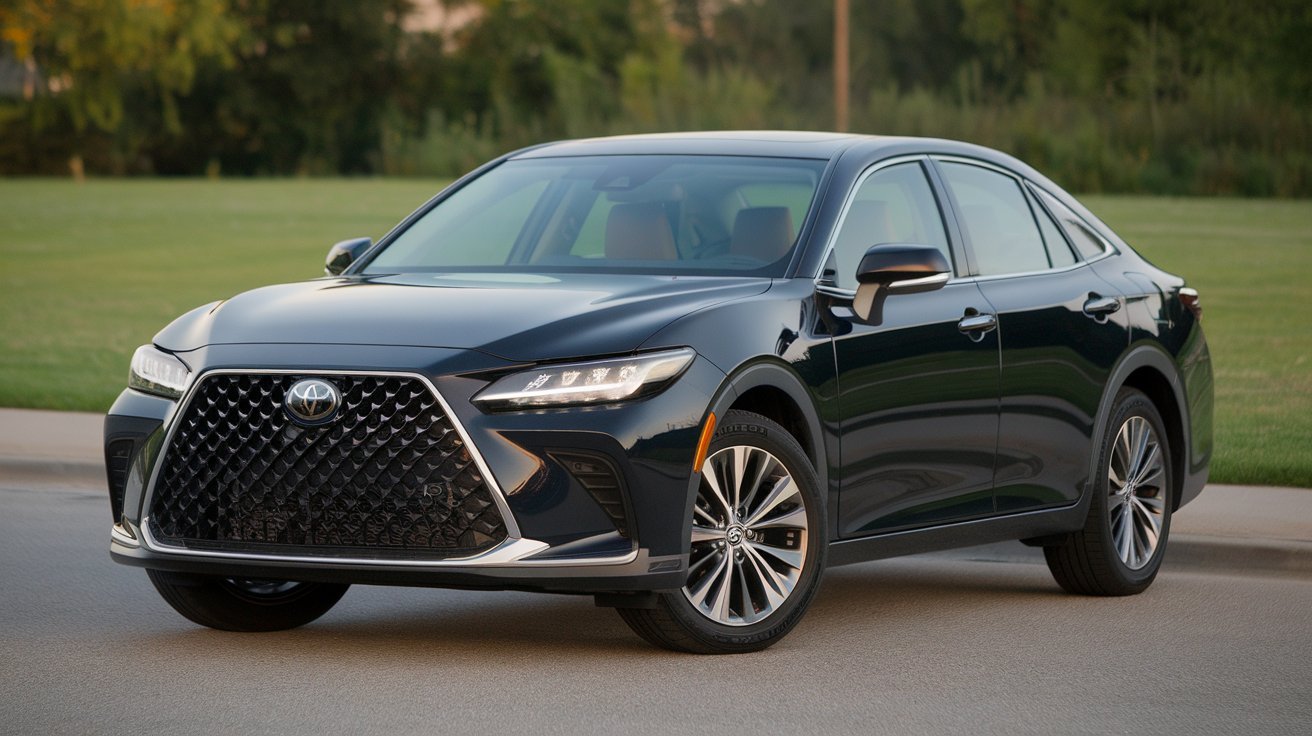
The 2025 Toyota Crown XLE combines the elevated driving position of a crossover-inspired sedan with Toyota’s proven hybrid technology, standard all-wheel drive, modern technology and an upscale interior. For buyers looking for a comfortable daily driver with strong fuel economy without moving into a traditional SUV, the Crown XLE offers an interesting alternative.
For the 2025 model year, the Toyota Crown lineup includes the XLE, Limited, Nightshade Edition and Platinum grades. The XLE sits at the entry point of the Crown range, but it still includes a substantial collection of comfort, safety and technology features. Toyota equips the XLE with a 2.5-liter four-cylinder hybrid powertrain, electronic on-demand AWD and an electronically controlled continuously variable transmission.
2025 Toyota Crown XLE Price and Position in the Lineup
The 2025 Toyota Crown XLE has a published starting MSRP of $41,440 in the U.S. market before applicable taxes, registration, dealer charges and optional equipment. The Limited starts at $45,950, while the Nightshade Edition starts at $48,765. The Platinum, which uses the more powerful Hybrid MAX system, starts at $54,990.
This positioning makes the XLE the most accessible way to enter the 2025 Crown lineup. Importantly, choosing the XLE does not mean giving up the Crown’s fundamental hybrid and AWD setup. All-wheel drive is standard, and the XLE uses the same 2.5-liter hybrid configuration shared with the Limited and Nightshade grades.
The XLE also has a distinct identity within the Crown range. Instead of concentrating on maximum performance, it emphasizes fuel efficiency, comfort, everyday usability and standard equipment.
2025 Toyota Crown XLE Engine, Hybrid System and Performance
Under the hood, the 2025 Crown XLE uses a 2.5-liter Dynamic Force four-cylinder hybrid engine. Toyota lists output at 236 net combined horsepower. Power is delivered through an electronically controlled continuously variable transmission (ECVT).
Unlike the Platinum, the XLE does not use Toyota’s 2.4-liter turbocharged Hybrid MAX system. The Hybrid MAX is exclusive to the Platinum and produces 340 net combined horsepower and 400 lb-ft of torque. The XLE instead prioritizes efficiency and smooth everyday operation.
One of the defining characteristics of the XLE is its Electronic On-Demand All-Wheel Drive system. Rather than relying on a conventional mechanical driveshaft to continuously connect the front and rear axles, the system uses a separate rear electric motor when additional rear-wheel traction is required. Toyota describes the system as capable of varying front/rear driving force between 100:0 and 20:80, depending on conditions.
The XLE also provides Eco, Normal and Sport drive modes, allowing drivers to adjust the vehicle’s driving character. EV Mode is also available as part of the hybrid system’s operation.
2025 Toyota Crown XLE MPG and Fuel Economy
Fuel economy is one of the strongest reasons to consider the 2025 Toyota Crown XLE. Toyota lists EPA-estimated fuel economy of approximately 42 mpg city, 41 mpg highway and 41 mpg combined for the XLE.
That figure gives the XLE a significant efficiency focus for a vehicle of its size and standard AWD configuration. The 14.5-gallon fuel tank also provides practical range for commuting and longer highway journeys, although real-world fuel economy will vary with driving style, weather, traffic, terrain, vehicle load and other conditions.
The XLE uses a nickel-metal hydride hybrid traction battery with a listed voltage of 230.4 volts. Toyota’s hybrid system combines gasoline and electric propulsion to reduce fuel consumption, particularly during lower-speed driving and situations where electric assistance can contribute to propulsion.
For buyers comparing the XLE with the Platinum, there is an important tradeoff: the XLE’s efficiency-focused hybrid system is rated at 41 mpg combined, while the performance-oriented Platinum’s Hybrid MAX powertrain is rated at 30 mpg combined.
2025 Toyota Crown XLE Interior, Comfort and Technology
Inside, the 2025 Toyota Crown XLE provides seating for five passengers. Toyota lists approximately 42.1 inches of front legroom and 38.9 inches of rear legroom, with 38.2 inches of front headroom and 37.5 inches in the rear.
The XLE includes heated and ventilated power-adjustable front seats, heated rear outboard seats and a heated steering wheel. These features give the entry-level Crown a notably well-equipped cabin rather than making buyers move immediately to a higher trim for basic comfort equipment.
Technology is centered around Toyota’s 12.3-inch Toyota Audio Multimedia touchscreen. The XLE includes a six-speaker audio system and supports wireless Apple CarPlay and Android Auto compatibility. Toyota’s multimedia platform also supports over-the-air updates, while available connected services can provide additional voice and vehicle functions depending on subscription and trial eligibility.
For cargo carrying, Toyota lists 15.2 cubic feet of cargo volume with the rear seatbacks in their normal position. The Crown’s sedan-like body means its cargo area is not intended to replace a large SUV, but it remains useful for groceries, luggage and everyday transportation needs.
2025 Toyota Crown XLE Exterior Design and Dimensions
The Crown XLE has a distinctive design that sits between a conventional sedan and a crossover. Its relatively tall body, elevated seating position and standard AWD give it a different character from a traditional low-slung sedan.
Toyota lists the Crown at 196.1 inches long, 72.4 inches wide and 60.6 inches tall, with a 112.2-inch wheelbase. Ground clearance is listed at 5.8 inches.
The XLE rides on 19-inch alloy wheels, contributing to its upscale appearance while maintaining a balance between ride comfort and road presence. Toyota also provides LED lighting, heated power exterior mirrors and other practical exterior equipment as part of the Crown’s standard configuration.
The design is one of the Crown’s most noticeable characteristics. Rather than copying the appearance of either a traditional luxury sedan or a conventional crossover, Toyota gives the vehicle a high-riding fastback-inspired profile.
2025 Toyota Crown XLE Safety and Driver Assistance
Safety technology is another important part of the Crown XLE package. The 2025 Crown incorporates Toyota Safety Sense 3.0, Toyota’s suite of active safety and driver-assistance technologies. The XLE also includes features such as Blind Spot Monitor and Rear Cross-Traffic Alert.
The standard backup camera provides a projected path and dynamic gridlines, helping drivers maneuver the relatively long Crown in parking lots and tight spaces. Toyota also provides electronic braking technology with regenerative braking as part of the hybrid system.
Higher trims can add technologies such as a Panoramic View Monitor, parking assistance and other advanced convenience features, but the XLE already establishes a strong baseline of driver-assistance equipment.
Is the 2025 Toyota Crown XLE a Practical Choice?
The 2025 Toyota Crown XLE is designed around a combination of attributes rather than one single priority. Its 236-horsepower hybrid powertrain, standard AWD, approximately 41 mpg combined, 19-inch wheels, spacious front seating, heated and ventilated front seats, 12.3-inch touchscreen and comprehensive safety technology make it a well-rounded configuration.
It is particularly relevant for drivers who want hybrid efficiency without choosing a conventional compact sedan, while also wanting the additional traction of AWD. The Crown’s elevated body and distinctive styling further separate it from conventional sedans.
At the same time, buyers seeking maximum acceleration should look toward the Platinum’s Hybrid MAX system, while shoppers wanting additional luxury features can compare the XLE with the Limited and Nightshade Edition.
Overall, the 2025 Toyota Crown XLE represents the efficiency-oriented foundation of Toyota’s Crown lineup. With standard AWD, strong hybrid fuel economy, a 236-horsepower powertrain and a substantial list of standard comfort and technology features, it provides a distinctive alternative for drivers who want something between a traditional sedan and an SUV.


 Celebrity3 months ago
Kent Bateman: Biography, Career, Family, and Legacy in the Entertainment Industry
- Celebrity3 months ago
Jack Wilson: Biography, Career, Achievements, and Lasting Legacy
- Celebrity3 months ago
Enzo Lopez: Biography, Age, Career, Family, Social Media Success, and Future Plans
- Business3 months ago
Zingyzon.com: Complete Guide to Features, Benefits, User Experience, and What You Should Know
- Celebrity3 months ago
Jerry Stokes: Biography, Career, Leadership, Achievements, and Lasting Legacy
- Blog3 months ago
9×3: Understanding the Multiplication of 9 and 3 with Examples, Applications, and Learning Tips
- Tech3 months ago
From TurboGeek.org Blog: The Complete 2026 Guide to Technology, Artificial Intelligence, Digital Innovation, and Smart Online Resources
- Celebrity3 months ago
Margie Washichek: Biography, Early Life, Relationship, Career, and Legacy (2026 Guide)